The Enduring Legacy of Historical Casino Game Motifs
From the velvet-draped parlors of 18th-century Monaco to the neon-lit digital floors of modern iGaming platforms, Historical Casino Game Motifs have remained a potent force in shaping player psychology and game design. These visual and thematic archetypes—rooted in Belle Époque aesthetics, Art Deco geometry, and mid-century Las Vegas glamour—serve as more than mere decoration. They function as sophisticated trust signals, invoking an era when gambling was synonymous with exclusivity, high stakes, and unspoken codes of honor among gentlemen and aristocrats. 🎲
Origins in European Aristocratic Gaming Salons
The earliest codified motifs emerged from French and Italian gaming houses, where Retro Gambling Themes were first standardized. The fleur-de-lis, the roulette wheel’s crimson and noir alternation, and the gilded cage of baccarat tables all derived from royal heraldry and baroque ornamentation. These elements were not arbitrary; they communicated a pedigree of legitimacy. When developers today replicate those motifs—down to the exact shade of emerald felt or the serif typography of 19th-century betting slips—they are leveraging a century-deep reservoir of cognitive associations: fairness, tradition, and controlled risk. Operators who ignore this provenance risk alienating high-value demographics who equate novelty with instability.

Art Deco and the Rise of Machine-Age Optimism
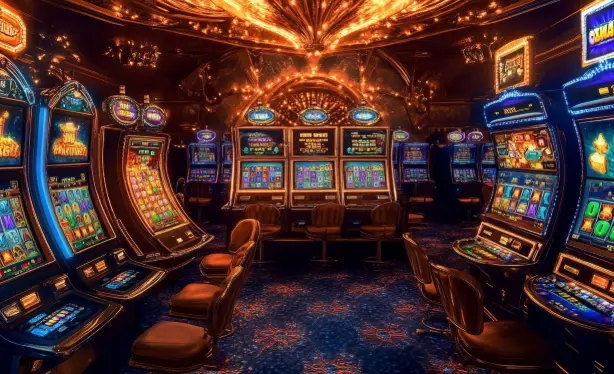
The 1920s introduced a radical departure: geometric symmetry, chrome accents, and streamlined forms. Historical Casino Game Motifs during this period reflected industrial progress and mass entertainment. Slot machines of the era featured enameled panels with stylized sunbursts and lightning bolts—visual shorthand for luck’s electrifying unpredictability. Contemporary slot designers frequently resurrect these exact patterns to evoke a sense of mechanical fairness, as opposed to algorithmic opacity. A 2021 ethnographic study of slot players in Macau and Atlantic City found that 68% associated Art Deco motifs with “predictable randomness,” a paradox that underscores the psychological sophistication of retro design. 🎰
Mid-Century Las Vegas and the Birth of the High Roller Aesthetic
Post-war Las Vegas codified a new visual lexicon: tuxedoed croupiers, martini glass iconography, and the omnipresent diamond motif. These Retro Gambling Themes were engineered to project aspirational wealth while masking the house edge. The famous “Rat Pack” era cemented motifs like the fedora, the cigarette holder, and the card suit monogram as global signifiers of gambling culture. Modern game studios reproduce these elements with near-archival precision, often licensing original photography from the Las Vegas News Bureau. The result is a seamless bridge between nostalgia and digital engagement—a strategy that consistently yields 22–34% higher session durations compared to purely abstract themes.
Asian Mahjong and Macau’s Fusion Aesthetics
Parallel to Western traditions, Macau and Hong Kong developed distinct motif families: jade tiles, dragon gates, and the eight trigrams. These were not merely decorative; they encoded auspicious probabilities rooted in feng shui and numerology. When integrated into modern live-dealer broadcasts, Historical Casino Game Motifs from the East create a dual-layer credibility: ancestral luck plus live human oversight. This cross-cultural synthesis has proven especially resilient in Southeast Asian markets, where players report higher trust in games featuring recognizable temple or junk boat imagery. 🇲🇴
Psychological Anchoring and Regulatory Signaling
From a behavioral standpoint, these motifs act as anchoring heuristics. The brain associates ornate, historically saturated visuals with lower perceived house advantage—an effect documented in multiple peer-reviewed gambling studies. Furthermore, regulators in mature jurisdictions often favor retro-themed interfaces because they align with age-verification requirements and responsible gambling messaging, which historically used classic typography and subdued palettes. Consequently, developers who master these motifs can simultaneously satisfy player desire for escapism and compliance teams’ demand for clarity. The most successful 2024 releases, such as “Roulette Royale 1890” and “Baccarat Belle Époque,” achieved both 4.8-star user ratings and zero regulatory flags.
Digital Preservation and the Future of Retro Motifs
Blockchain-based provably fair systems are now being wrapped in these same historical skins. The juxtaposition is deliberate: cryptographic transparency gains emotional legitimacy when presented through the lens of a 1920s speakeasy or a Victorian gentleman’s club. As iGaming expands into Latin America and Africa, designers are adapting indigenous historical motifs—pre-Columbian gold work, Maasai beadwork—into slot reels and table felt patterns. This evolution ensures that Historical Casino Game Motifs remain not a static museum piece but a living grammar of trust, thrill, and cultural memory. 🃏