
What House Edge Actually Means at a US Casino
The house edge is the mathematical lock a US casino holds over every dollar you wager, and it is baked into the payout structure before a single card is dealt. Strip away the neon and the comps, and what remains is a cold percentage: the average portion of each bet the operator keeps over the long run. If a game carries a 5% edge, you lose $5 on average for every $100 cycled through the machine or table. That is not a fee, not a rake, not a courtesy — it is the engineered margin that keeps the floor profitable while you chase variance.
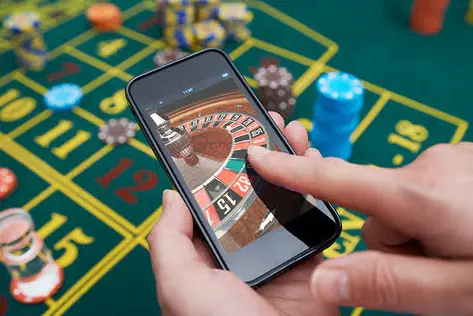
Where the Number Physically Lives
Most players think the edge is a policy decision. It is not. On a mechanical slot, the edge is wired into the reel strip layout and the paytable mapping — the physical distribution of symbols decides how often a jackpot line is even geometrically possible. On a video poker terminal, the edge is a function of the pay schedule versus the exact 52-card deck cycle. On the felt, it is the difference between true odds and casino odds. A single-zero wheel pays 35-to-1 on a straight number but the true odds are 37-to-1, and that two-unit gap is the entire house edge expressed in the rawest possible terms.

The Games With Brutal Versus Barely-There Margins
Not all edges are created equal, and the spread is embarrassing. Blackjack played with basic strategy against favorable rules sits near 0.5%, which is about as close to fair as a US casino will ever let you get. Craps pass line with full odds can dip under 1%. Then you walk into the pit and see the wheel: American roulette with its double zero carries a 5.26% edge, nearly ten times the blackjack figure, because that extra green pocket is a permanent tax on every spin. Keno and big six wheels can shove the number past 20%, which is why the suits love them and sharp players ignore them.
The Hold Versus the Edge — Do Not Confuse Them
This is where amateurs get slaughtered. The house edge is a per-bet mathematical constant; the hold percentage is what the cage actually keeps against the drop box, and it depends on how long you sit and how fast you cycle money. A 0.5% edge at 80 hands per hour with $50 bets bleeds $20 an hour in expected value. A 5% edge on a slow, grinding machine can look gentler on paper but punishes every single wager identically. Time on device is the silent multiplier, and the operators know it. 🎰
Why the Edge Never Lies and Variance Only Delays It
Short-run results are noise. You can beat a 5% edge for an hour, a night, even a weekend — that is variance doing its work. But the law of large numbers is not a suggestion, and the house edge converges with brutal precision as sample size grows. The casino does not need to win every hand; it only needs volume. Every dollar you push through the machine is a tiny donation to the margin, and the floor's entire architecture — the payout tables, the deck composition, the reel physics — is tuned to guarantee that the grind runs in one direction. 🎲
The Only Lever You Actually Control
You cannot negotiate the edge, hack the payout table, or out-run the math forever. What you can control is game selection and bet sizing. Choose the low-margin games, play the rules that shave fractions off the number, and never treat a 5% edge table as if it were a coin flip. The house edge is the single most important number on the floor, and every sharp player reads it before touching a chip.